




Bevor Sie gehen...

×

You currently have 0 Article in the shopping cart.

If you switch to another page, you may need to refill your shopping cart after some time.

View basket Leave webshop


Fleur primeur – Delicate Spring Greetings from the Flower Garden

Wintertime, barren time? Not at all!

The cold season brings colorful floral delights that are only available now. A perfect reason to combine them in many ways—and enjoy them to the fullest.

The year is beginning! The calendar may still mark the depths of winter, but the days are already noticeably getting longer. And already, the first delicate blooms of the new year are lifting their charming heads. Brighter days, fragrant blossoms—and we feel our spirits rise.

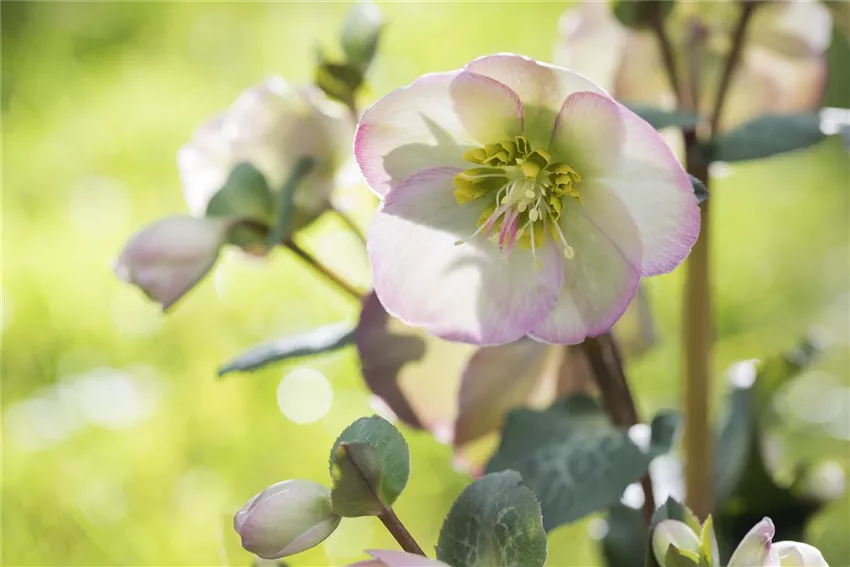
Now is the season for wonderful winter bloomers: Winter-flowering fragrant viburnum in delicate porcelain pink, for instance, and the fascinating witch hazels in vibrant yellow, orange, or red. These pair beautifully with the enchanting Christmas roses: white blossoms over dark foliage—later varieties are now in full bloom! But did you know that Christmas roses are more than just a potted plant? After blooming, plant them in a partially shaded spot in the garden. There, they’ll thrive for years and bloom more abundantly with each passing year.

This now frees up space in your pots for the first colorful variety of spring: auriculas and forget-me-nots, bellis, daffodils, and tulips in all their vibrant splendor.

Winter blooming wonders for shady beds

As long as the ground isn’t frozen, you can transplant Christmas roses from pots into the garden bed. Christmas roses grow best in loose, slightly acidic soil (pH 6 to 7), and most of them prefer spots that aren’t too sunny. They do not tolerate waterlogging at all. In the wrong location, Helleborus—as it’s known botanically—may produce excessive growth, resulting in soft foliage that becomes susceptible to fungal diseases.

Do not plant Christmas roses too deep (“keep the heart above the soil”). When planting them now in winter, cover them with a protective layer such as garden fleece or fir branches.

With the colorful floral splendor of delicately scented primroses, also known as auriculas, a welcome burst of color finally returns to the home: radiant yellow, brilliant red, deep dark blue – how long we’ve waited for these vibrant shades since the last days of summer! From the front door to balconies and terraces, there's always room for charming auriculas. Even on your desk at work, they bring cheerful color and are a delightful little gift: “Look, spring is coming!”

Stylish auriculas – now even in rose-like beauty! With double blooms and charming bud shapes, these newcomers in specialty garden centers irresistibly resemble elegant rose bouquets. Rose-shaped auriculas – you can easily go for more than just one, as they make your arrangements look even more springlike. It’s a double win, by the way: even after flowering, they remain valuable. Simply plant them in a moist, partially shaded spot in the garden, such as the edge of a shrubbery. Then next spring, these popular harbingers of the season will greet you once again with their radiant display of color!

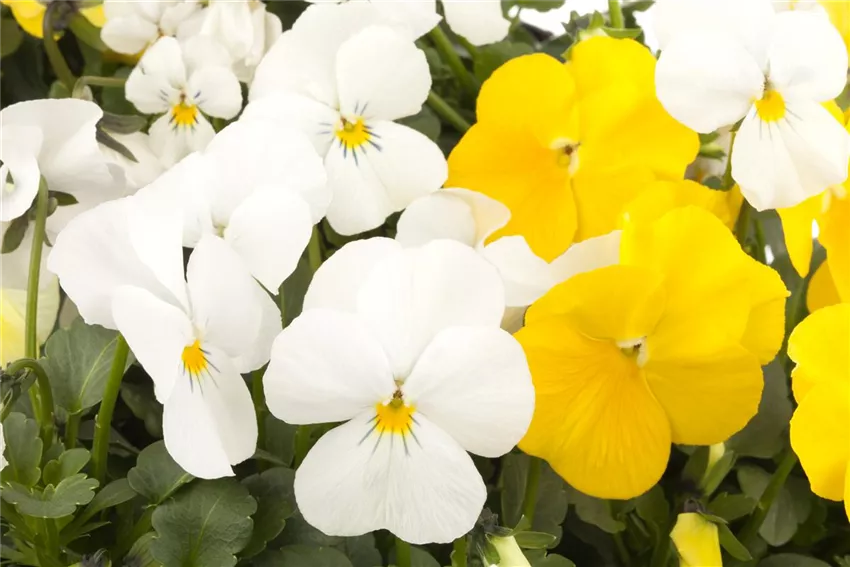
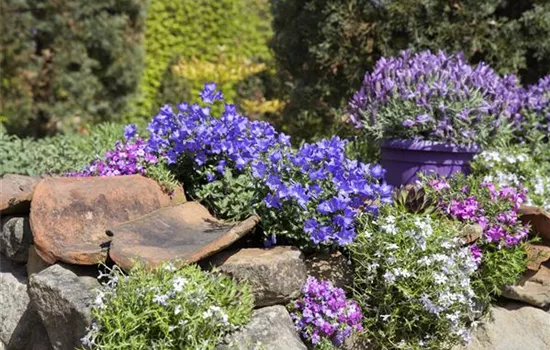
Even more than the splendid auriculas, the charming horned violets are already gazing toward the approaching spring. Simply enchanting—watching this sea of blooms dance in the breeze, their colorful faces nodding gently. And these little flower faces are more vibrant than ever. Thanks to recent advances in breeding, growers have created an ever-growing range of new color combinations—making it easier than ever to design gardens as unique as your own imagination.

But now, these vibrant floral carpets are available in a whole new dimension! Where horned violets were once best suited for beds and pots, the brand-new Cool Wave horned violets are now conquering new heights—hanging baskets and elevated planters. Cool Wave horned violets are specially bred for use in hanging containers. While their potted and bedding relatives grow upright and bushy, Cool Wave varieties produce long trailing stems, also covered in masses of blooms. If planted early, they can even begin flowering in autumn. After a short pause during frosty spells, they bounce right back into full bloom.

Cool Wave horned violets also have a special care requirement. Because they're such prolific bloomers, and nothing comes from nothing, it’s best to plant them in high-quality potting soil and support their growth and flowering performance with liquid fertilizer, adjusted to the weather and growth stage. One important tip when purchasing Cool Wave horned violets: take a close look! Young plants are indistinguishable from non-trailing varieties, so make sure they carry the official "Cool Wave" label to be sure you're getting the real thing.

And the colorful joy of early spring continues: Gloomy winter days meet a tempting world of color! Pretty, fluffy Bellis blossoms in white and pink go wonderfully with auriculas and horned violets. And at garden centers, you’ll now find a beloved spring classic already in bloom in time for Valentine’s Day: the Forget-me-not ‘Mon Amie’.

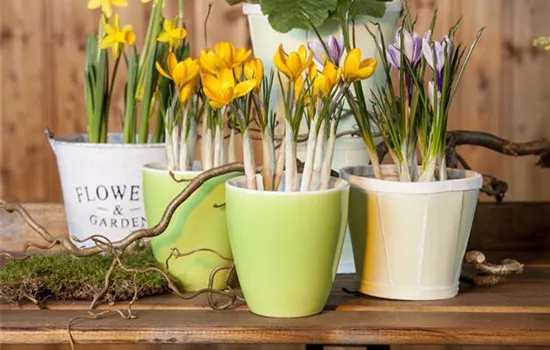
While snow and ice may still reign outdoors, gardeners are already flinging open the windows to spring—with glorious flowering bulbs in all their splendor.

Short-stemmed varieties are especially well-suited for pots and containers, and they come in a range of shades—from soft pastels to rich, vibrant tones, including double-flowered options. If you’d like to snip a few tulips for a vase, it’s best to go with Triumph tulips or Darwin tulips, which have sturdy stems perfect for cutting. In the late winter and early spring garden, however, lily-flowered tulips and parrot tulips steal the show. The former impress with their pointed petal tips, while the latter boast bold, painterly patterns and wavy petal edges that look like they were brushed on by an artist.

Viridiflora tulips are also becoming increasingly popular. Their blossoms combine white, cream, or pink shades with elegant green stripes for a sophisticated look.

By the way: It’s not just tulips—daffodils also come in a surprising range of varieties that go far beyond basic yellow. Tazetta daffodils and split-corona daffodils bring lovely orange tones into the spring garden. And few blooms are as poetic as the radiant white Poeticus daffodils, especially the classic variety ‘Actaea’, which calls to mind the most beautiful spring poems.

Similar reports

Show more Spring on the balcony is impossible without colorful flowers
Spring on the balcony is impossible without colorful flowers

The flower enthusiast welcomes spring on the balcony, marking the start of the new blooming season, where they can indulge in endless planting before…

Show more Gardening tasks in May.
Gardening tasks in May.

Once the Ice Saints have passed, even frost-sensitive summer flowers can finally go outdoors! As a result, May is usually one of the busiest months…

Show more Spring at Your Doorstep – Time for Decoration
Spring at Your Doorstep – Time for Decoration

When the days start getting longer, the air smells like spring, and the sun comes out again, it’s time to welcome spring right at your doorstep.…

IMPRESSIONEN

Buga_1.png


Buga_2.png


Buga_3.png


Buga_4.png